
Fields in Grand County Property Tax Records
The county tax result keeps things lean. Columns show Parcel, Owner, Property Address and City. Open an entry and you get a status code plus the date through which back-tax interest is calculated, and a printed roll date tells you when the information was current. Values come from one office and money from another. The Assessor handles assessed or market value, while the Treasurer produces the amount due and the payment status. Not every number on the page is this year's bill. Read each figure for what it actually represents.
| Field | What It Shows | Where |
|---|---|---|
| Parcel / Owner | Parcel key and owner name shown on the roll | County tax search |
| Property Address / City | Situs location fields in the result table | County tax search |
| Roll date and status | Record date and code such as OK, XX, IA, NT or EX | Individual tax record |
| Back-tax interest date | Date through which displayed interest is calculated | Individual tax record |
| Bill and payment | Current statement, prior-year or collection context | Treasurer payment route |
A tax bill is not a market value and not a sale price. The Assessor determines value for assessment purposes, and the Treasurer applies the tax rates to that assessment when billing. Some parcel-card fields and the full exemption list stay off the public materials, so a question about a specific account or eligibility goes straight to either office.
Read Grand County Tax Status Codes Correctly
Grand County uses five short status values: OK, XX, IA, NT and EX. OK means active, XX deleted, IA inactive, NT not taxed and EX exempt. Each label describes only the line's tax-roll status. It says nothing about title, occupancy or zoning. A parcel that looks deleted or inactive may have a successor entry. So search its current address or legal description, and ask the Assessor whether an updated record exists. For an exempt parcel, ask which record or application supports that status. Do not guess at the owner's circumstances.
The record also prints a "Back Tax Interest Calculated through" date. That is a calculation cutoff, not the day you loaded the page. Compare it against the current statement. Then call the Treasurer for a payoff or delinquency figure. The county states that roll information is accurate as of the date printed on each record. So write that date down whenever you save results.
Find a Grand County Tax Bill by Parcel or Address
Start with the parcel in the county tax roll. Then move to the Treasurer's payment and search links. A complete parcel number is the cleanest route. Without one, use the owner or partial address mode. Match the City and Property Address columns, and open the statement for the right year. The instant-payment page offers a View Bill or View Statement option without requiring a payment. It does need the parcel number or account information, though. Check the tax year and back-tax interest date. Do this before treating the displayed amount as a current payoff.
- Locate the parcel in the Grand County tax search using one search key.
- Open the current bill or statement and note its tax year and status.
- Compare the assessment and any exemption or abatement information with the Assessor’s record.
- For a delinquency question, confirm the current total and payment status with the Treasurer.
- Assessed value
- The Assessor’s value used in the tax calculation under applicable state rules.
- Tax levy
- The taxing entities’ rates and budgets applied to the taxable amount.
- Exemption or abatement
- A tax treatment handled through the county application process; ask the custodian about eligibility.
- Tax lien
- A claim associated with unpaid taxes; confirm its recording and status in official records.
Separate Grand County Assessment from Collection
The Assessor sets real-property market value. It runs an annual sales-ratio study. It also updates the roll at least once a year. The office visits new construction and completes appraisal areas on a five-year cycle. The Treasurer bills and collects property tax. It distributes funds to taxing entities and processes refunds and appealed valuations. It also publishes an annual delinquency listing. It never decides market or taxable value. The Clerk/Auditor and the Utah State Tax Commission handle rates, budgets and broader tax administration.
This division matters when a record looks wrong. A value or property-characteristic question goes to the Assessor. A payment, balance or distribution question goes to the Treasurer. Disputes over assessed value follow the Board of Equalization process. An unpaid bill must go through the Treasurer. Tie every request to the exact parcel and tax year.
When Grand County’s Current Bill Appears
Grand County uploads the tax roll most months. The current-year bill normally appears in early November. So the assessed record and the issued bill can surface at different points in the calendar. Use the printed roll date to interpret an owner or value entry. Then return to the Treasurer's live page for the current payment statement. A newly recorded deed can also precede the roll's reflection of the change. The county publishes no guaranteed update window.
Fees depend on the processor. The county's published instructions list 2.5 percent for card payments with a $2.50 minimum. They list free one-time eChecks and 49 cents for recurring eChecks. Those amounts can change, so confirm the payment page before submitting. Remember that a bill display is not a receipt. A receipt is not a recorded release of a separate lien.
The Treasurer's official page links payment methods, due-date and delinquency information.
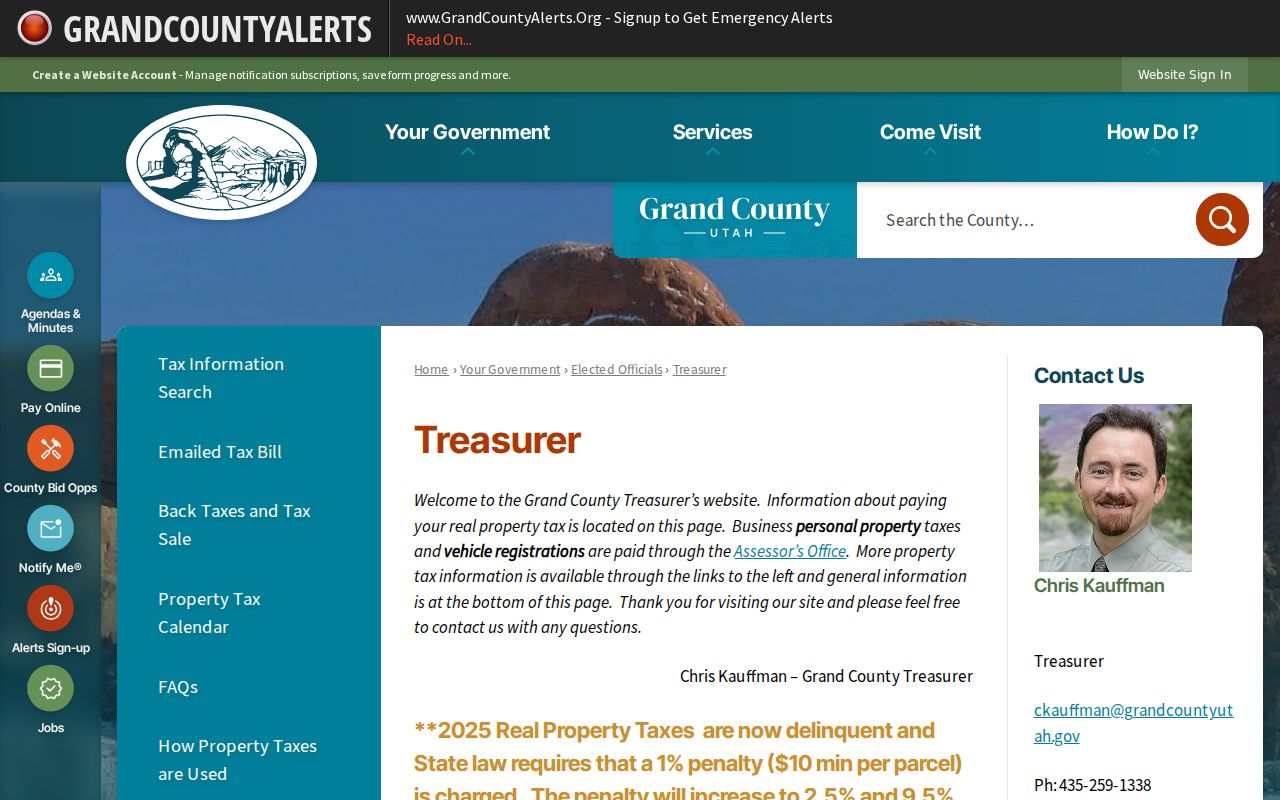
The image shows the county's billing and payment route; use the live page for the current year's statement and fees.
Find Older Grand County Tax Rolls in Utah Archives
Grand County tax history reaches deep. The Utah State Archives keeps Treasurer assessment rolls from 1890 through 1996. It also holds delinquent-tax records, tax-sale files, redemption certificates, assessment indexes, inheritance-tax and lien books, and account material. A 2026 finding-aid update added assessor taxpayer statements from 1913. It also names Board of Equalization notifications from 1893–1896. These series-level records show who appeared on an assessment roll. They also show how a tax sale unfolded. They are not a searchable owner database.
Begin with the parcel number and legal description. Ask Archives staff which volumes cover the year in question. A tax roll supplies historical assessment context. A deed remains the evidence of a recorded conveyance. Combine the Recorder's index with the Archives when an online search stops short. Use this when you need an earlier era. One shortcut exists. The Archives' current finding-aid list identifies every Grand County tax and treasurer series.
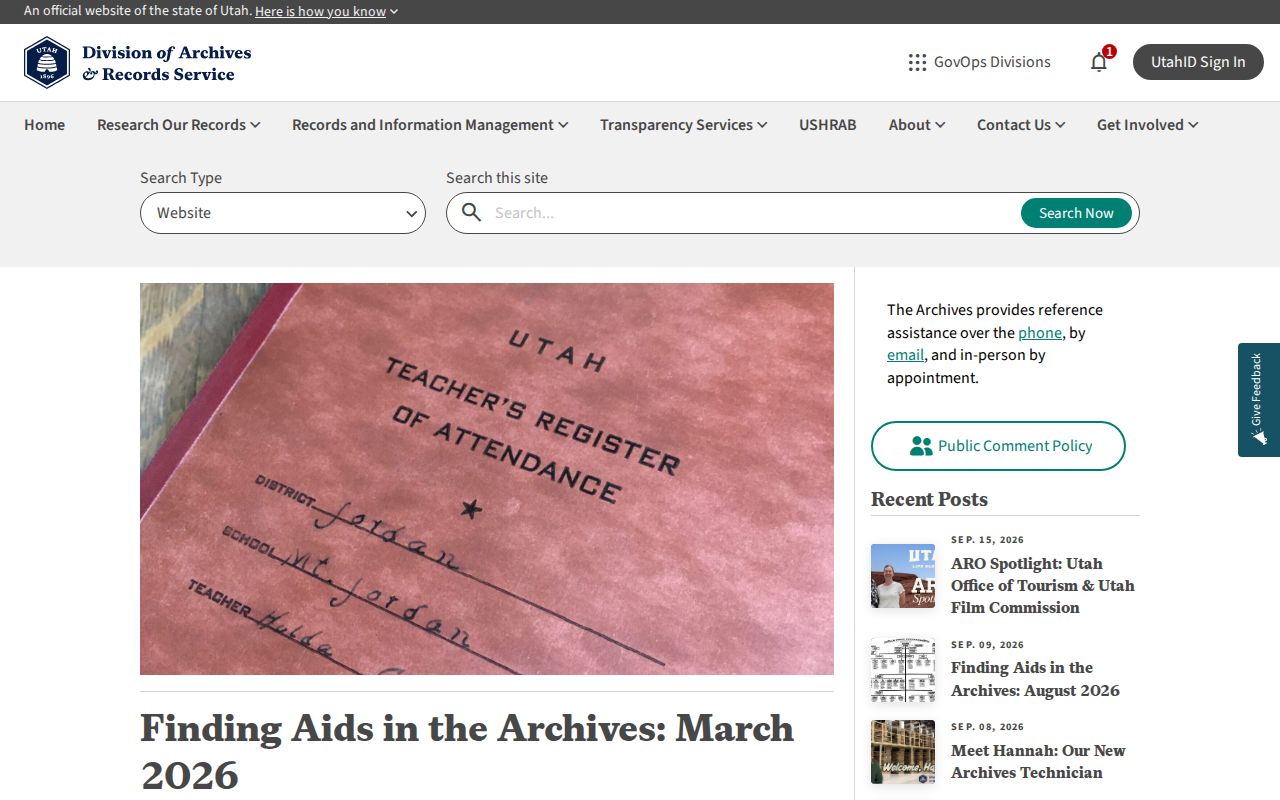
Confirm series details with Archives staff first. Ask about access terms before requesting a volume or planning a research visit.
Grand County Delinquency and Tax-Sale Leads
The Treasurer posts an annual delinquency listing. The county's tax search also returns a status and a back-tax-interest date for each parcel. Grand County's 2025 notice described a 1 percent penalty. It set a $10 minimum per parcel, with higher charges for any balance still unpaid on February 2, 2026. That date has passed. Treat the notice as history, not a payoff rule. Rely on the current year's notice and ask the Treasurer for an account-specific amount before acting.
Older cases live in the Archives. Its Grand County holdings include delinquent-tax records, tax-sale files covering 1899–1998, and redemption certificates from 1939–1953. A distressed-property question may also need a Recorder search for a tax deed or lien, plus a Utah Courts Xchange search for foreclosure, redemption, or quiet-title cases. A tax status alone proves nothing about title.
Appeal a Grand County Assessment by the Current Deadline
Grand County's Board of Equalization for the 2026 cycle posts a September 15 deadline. It can also be 45 days from the notice mailing date, whichever comes later. Initial in-person hearings are scheduled for early September. If a notice arrives late, the 45-day clock can still be running. It can run even after the standard date passes. Read the owner's notice and the live BOE page. Do not assume the filing window has closed. The county's 2023 brochure listed a May–June window for that cycle. That older schedule does not carry over to a new appeal year.
Build the appeal around the parcel's assessment record and the notice itself. Describe the disputed characteristics clearly, then add sale or condition evidence for the individual property. An appeal contests value or classification. A bill's payment status is a Treasurer matter. Grand County's five-year appraisal areas and annual sales-ratio study explain when a property comes up for review. But a neighborhood trend never substitutes for parcel-specific proof.
Review the live Board of Equalization instructions before filing.
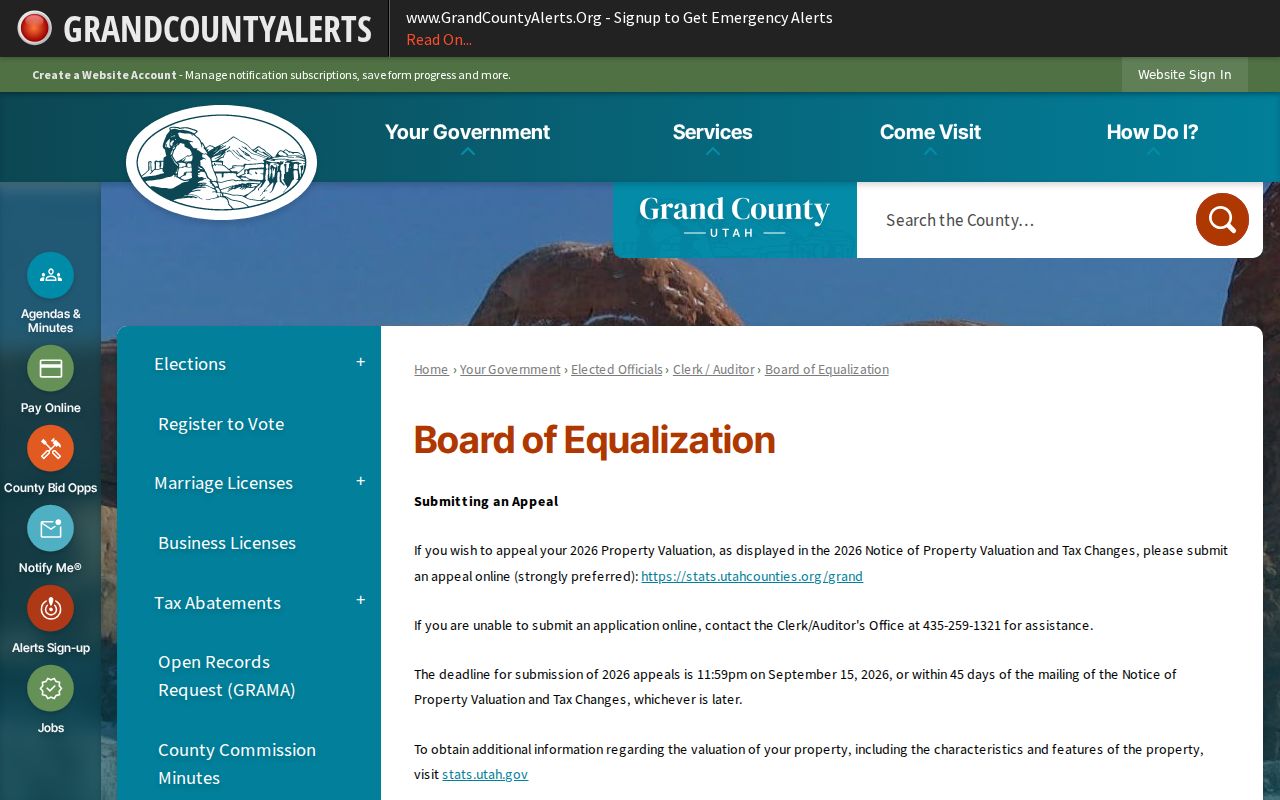
The live Board of Equalization page changes its appeal dates each cycle. Check it, along with the mailing date on the owner's own notice, before relying on any deadline.
Appeal window. Grand County’s 2026 Board of Equalization page set September 15, 2026, or 45 days from the notice mailing date, whichever is later. The standard date has passed, but a notice mailed after August 11 may have a later individual deadline under the 45-day rule. Check the notice and the live Board of Equalization page before filing; do not carry a prior year’s dates forward.