
Find Who Owns a Grand County Property by Following the Record
Start with what you know. An address goes into the Property Address field on the Grand County tax site. A name goes into Owner's Name, entered last name first with a partial surname. The Owner column that comes back points to the owner of record. It says nothing about who lives there. Jot down the parcel ID, situs address, city, and the roll date. Next, take the same parcel's legal description and the owner's name into AcclaimWeb. Open the most recent deed. Check the grantee and the record date. Walking between the two offices this way separates the tax roll from the instrument that actually recorded the transfer.
- Find the likely parcel in the county tax search using its address or owner name.
- Write down the parcel number, legal description, Owner column and roll date.
- Confirm the latest transfer in AcclaimWeb by grantee, grantor and legal description.
- If the grantee is an entity, inspect official Utah business filings where available; the exact current portal was not verified in the research.
Use the Grand County Tax Roll as the First Owner Lead
The county's public search returns four columns: Parcel, Owner, Property Address and City. That result often names a likely owner. But the public assessor page does not display a full parcel-card field list. The exact label on the name field needs direct confirmation from the Assessor. It may be Owner, Taxpayer or Owner Name. So does the delay before a new owner appears after a closing. The monthly upload note describes the roll itself. It does not guarantee a span from recording to an owner-field change. So treat any precise interval as unverified.
When a result looks right, compare its parcel number and legal description against the most recent deed. For a fresh closing, the deed's reception date and grantee are the real transfer checkpoint. A different mailing name can mean several things. It may be a correspondence address, an entity, or an estate. It may also be a former owner whose record has not been refreshed yet. Grand County's address, owner and parcel search instructions walk through the available lookup modes.
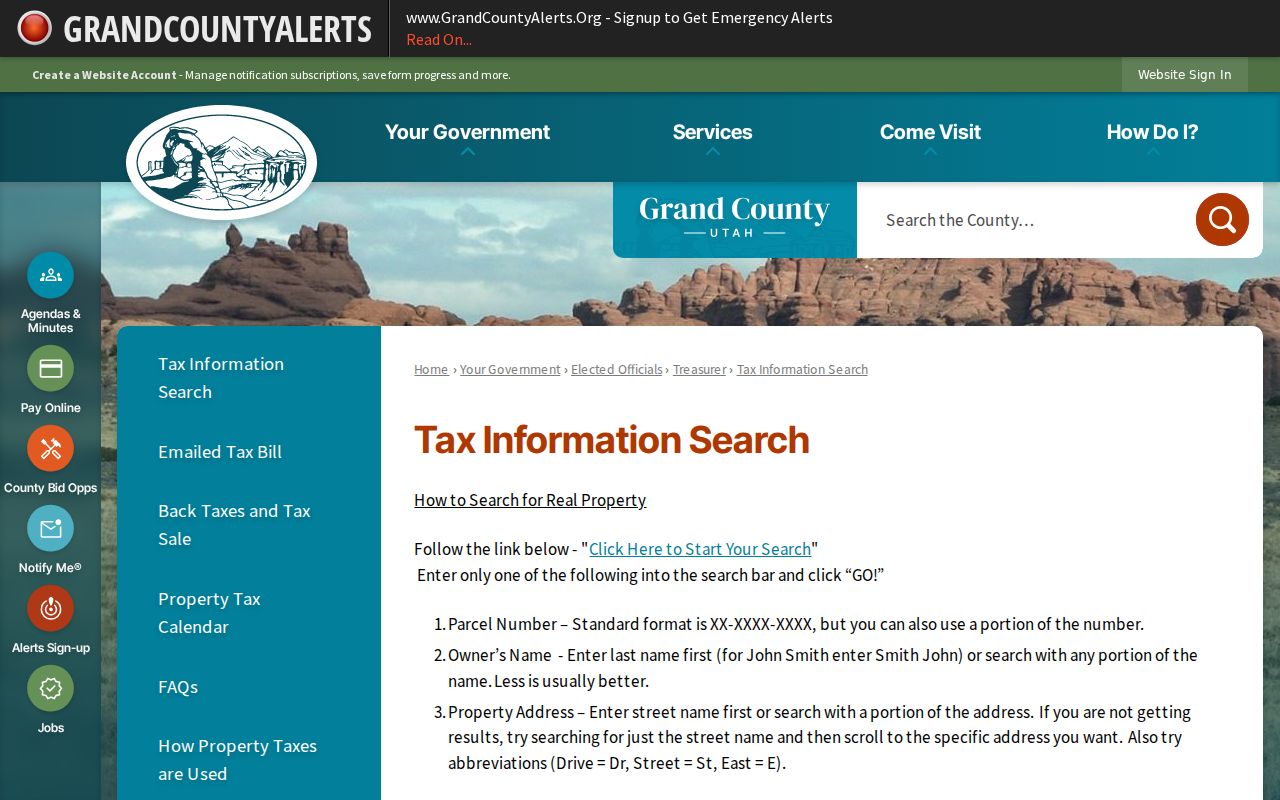
The official county page shown here is the path to the Owner column. Match the parcel number it returns to confirm the name belongs to the intended property.
Which Grand County Record Can Confirm an Owner?
Each record names an owner in its own context. The tax search gives the name on a dated roll. The recorded deed shows the grantee on an instrument filed with the Recorder. The GIS map links a location to a parcel ID. A state entity filing adds context when an LLC is the grantee. The Recorder index is the confirmation step for any recorded transfer. Even so, no public source promises that every interest is recorded. No index is entirely without a gap.
| Source | Owner Info It Gives | Access |
|---|---|---|
| County tax search | Dated Owner, Parcel, Property Address and City result | Public county search |
| Recorder’s AcclaimWeb index | Recorded grantee, grantor, date and legal description | Public index; copy fees may apply |
| Utah entity filing | Potential business registration and agent context | Use an official state route; current URL not verified |
| County parcel map | Location and parcel identifier; generalized type in SGID | Reference map, not title evidence |
An owner of record is a party named in a land or tax record. Grand County publishes that name in its official documents. An occupant is different. That person simply lives at the property, while the record name holds legal title. Keep two addresses straight as well. The situs address points to the parcel itself. The tax mailing address, where notices go, can be somewhere else entirely.
A grantee, meanwhile, is whoever receives an interest in a recorded deed. The deed's terms and any later filings still control what that interest means. Hold these Grand County property records distinctions apart. That keeps an address search from being mistaken for a personal-residence search.
Confirm the Grand County Owner with the Latest Deed
The AcclaimWeb portal offers several search modes. These include Name, Book/Page, Reception Number, Legal Description, Remarks, Doc Type, Sales Price/Documentary Fee, and Record Date. Start from the tax-roll owner as a likely grantee. Then match the legal description and the date. If the deed names a prior grantor, run that party and parcel through Grand County property records again. That confirms the chain holds together. The Recorder cautions users to try spelling variants. The portal's earliest online year, image cutoff, and full document-type list are not published.
Timing differs between record types. A tax roll uploads most months, while a deed records the day the instrument arrives. The county guarantees no closing-to-roll delay. So a just-recorded conveyance can appear before the owner name changes on the tax roll. For the full chain workflow and copy fees, see Grand County deed records.
When a Grand County Deed Names an LLC or Trust
A recorded grantee in Grand County may be a limited liability company, trust, estate, or other entity rather than a person. Copy the name exactly as indexed. Then inspect the deed to see how the transferee is styled and in what capacity the signer acted. Utah DOPL's contractor searches are not an entity-owner database. For registered business information, use the Utah Division of Corporations and Commercial Code's official route. Never infer beneficial ownership from a registered agent alone.
Probate can also break a clean chain. Search Grand County property records for personal-representative deeds, beneficiary deeds, estate distributions, and related filings. Utah Courts Xchange holds the corresponding case information. A death record or obituary can be a historical lead, but it does not transfer title. The recorded estate instrument is the land-record checkpoint.
Moab Permit Applicants Are Not Automatically Owners
A Moab building application lists several roles side by side. The assessor parcel number appears next to the permittee, the owner, the mailing address, the authorized agent and any contractors. That layout helps when an address alone is confusing. The permit's APN points to the right tax parcel. A contractor or agent on the form may hold no title at all. The city runs its permits through an online iWorQ portal that requires interaction, and its historical search coverage is not advertised. If the portal does not display a file, ask the city for a particular permit by address, parcel and approximate project date.
Put the pieces together carefully. The county tax roll's Owner column is a lead. The city application explains the project record. The latest recorded deed confirms the transfer. Keep those roles separate in your notes, so an applicant's name never lands in an owner field without documentary support. The City of Moab Building Inspection page links the permit route and its application instructions.
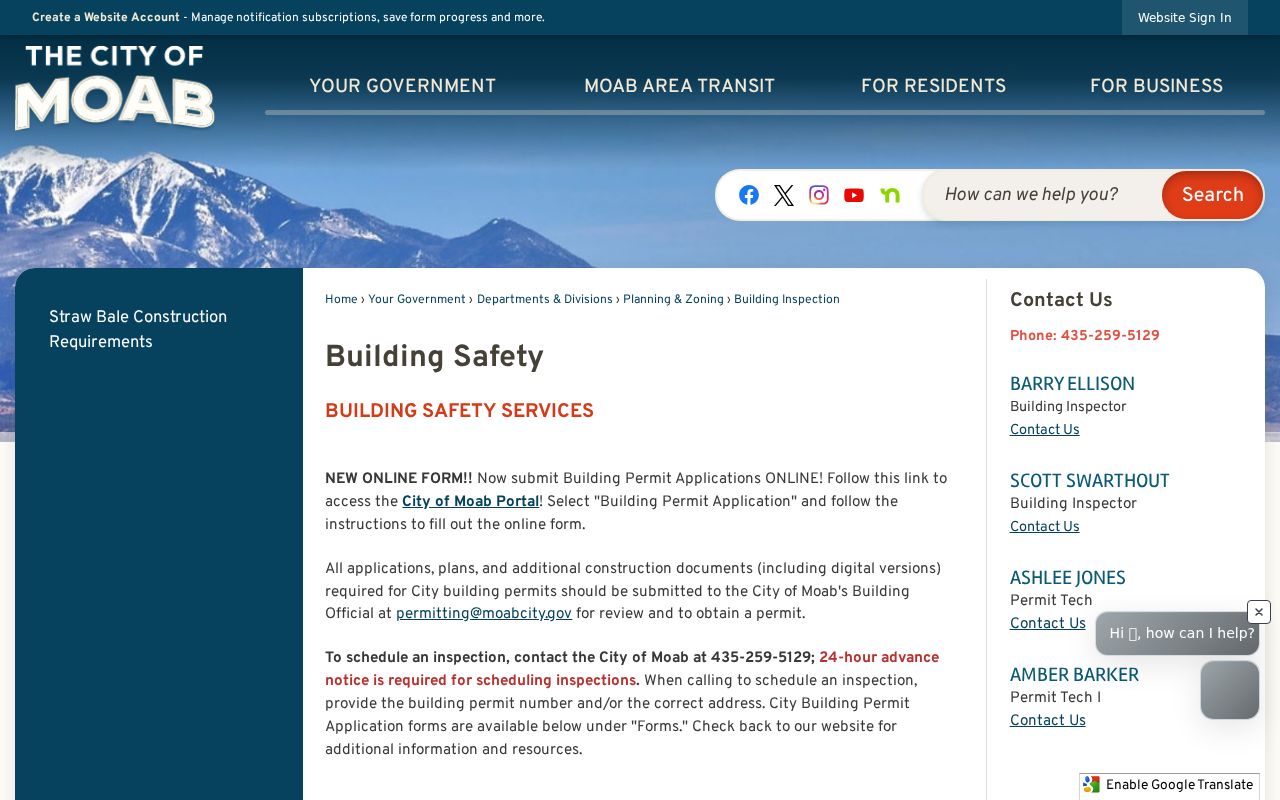
The city page shown here is the permit source itself; a form's parcel key can be cross-checked against Grand County records.
Grand County Owner Searches and Address Privacy
Public records can expose names, mailing addresses, parcel descriptions and recorded transactions. Utah softens that exposure with Safe at Home, an address-confidentiality program for eligible participants. It assigns a substitute address and forwards mail. It runs on a four-year certification term and carries statutory exceptions. Grand County's voter-privacy page draws its own line between public fields and private identifiers. It also offers an At-Risk designation route. A missing address is not permission to go hunting through unrelated databases.
When you make a real records request, keep it to a property question. Follow the custodian's published process. The county voter privacy page explains public, private and At-Risk record fields.
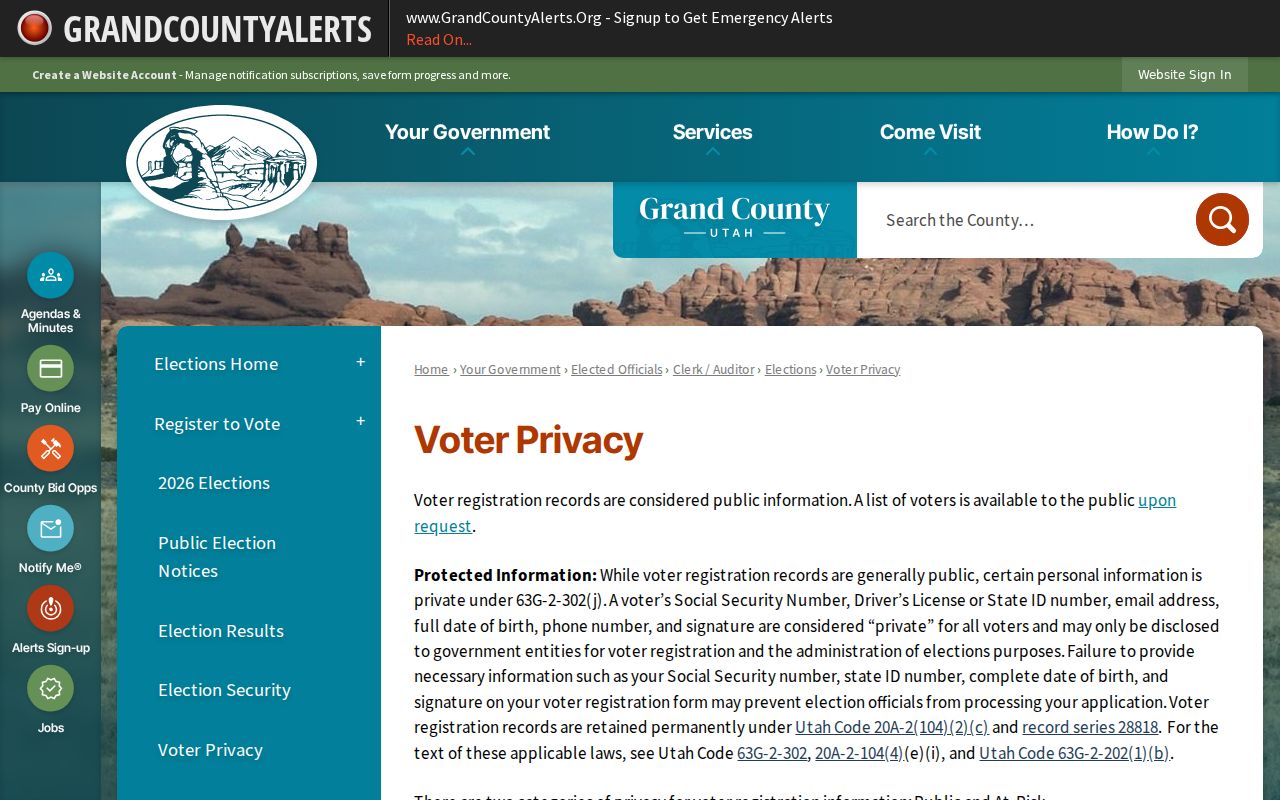
The privacy guidance covers voter records only. It is not a universal property-record opt-out, so read it within that limited scope.
Limits of a Grand County Owner Lookup
A Grand County owner lookup has real limits. It can show a name tied to a dated public record. It cannot prove who occupies the property. It cannot identify every beneficial owner behind an entity, guarantee title, or expose a protected address. The tax roll, deed index, court portal and map each describe different records. None tells the whole story alone. Verify names and roles from the underlying instrument. Contact the office that holds it whenever a result comes back incomplete.
Lawful use. Use a Grand County owner lookup for property diligence, house history and civic research. Do not use it to stalk, harass, intimidate or harm a person.